
Maybe crime shows pulled you in, or maybe everyone around you is doing MBBS and you want something different. The question is the same either way – is Forensic Science after 12th actually worth it in India? This guide answers that honestly, without the hype.
What Forensic Science Is and Why Students Are Picking It
Forensic science is not what TV makes it look like. Real forensic jobs are slower and far more detail-heavy than any show acts. That actually makes it more real, not less interesting.
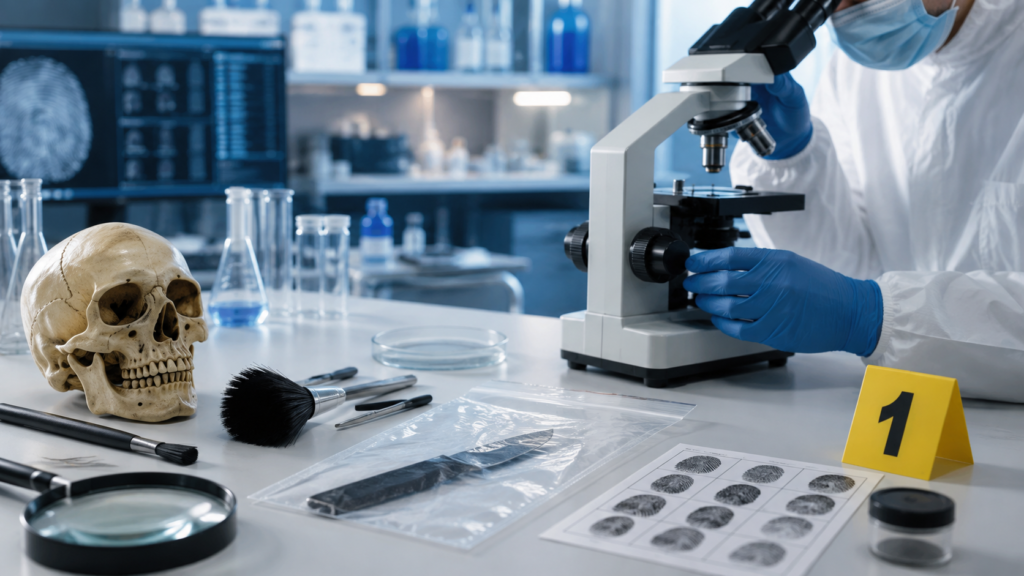
The course trains you to use science to solve crimes – blood samples, fingerprints, toxic substances, and digital data. The goal is to take overlooked details and build a picture of what actually happened.
The course runs for three years, mixing biology, chemistry, and technical subjects like cyber forensics. Some parts grab you immediately, others feel heavy – especially if your science basics are weak.
Forensic Science Scope in India
Forensic courses after 12th are what every student types at 11 pm before making their decision. Here is the honest version.
For years, forensic jobs mostly meant government labs – that is still a big part of the field. But cybercrime is rising and digital fraud is everywhere. Private agencies, legal firms, and corporate security teams now hire forensic professionals too.
Your degree opens the door. Your skills decide how far you walk with it.
Here is where forensic graduates typically end up working:
- Government forensic labs and police departments
- Cybercrime investigation units
- Private investigation agencies
- Legal support and documentation teams
- Corporate fraud investigation departments
Forensic Science Career Options After 12th
Most articles dump job titles without context – that does not help anyone. Here is what these roles actually look like for someone just starting.
After completing your B.Sc., these are the realistic starting points to make a career in Forensic Science:
- Forensic Lab Analyst
You work inside a lab studying samples and running tests. It is clear and repetitive work that requires patience and attention to detail. Most govt labs hire at this level for new graduates.
- Crime Scene Assistant
You support senior investigators at actual crime scenes. You help collect, document, and preserve physical evidence carefully. The work is not glamorous – but it builds foundational skills fast.
- Digital or Cyber Forensic Trainee
This is where the field is growing fastest right now. You help recover digital evidence from devices and networks. Cybercrime units and private firms both hire at the entry level for this role.
- Toxicology Lab Assistant
You work with chemical and biological samples to identify imports. Hospitals and pharma companies hire for this role. It is a calmer path but a stable and good one.
- Junior Investigator Roles
Private agencies and legal firms hire junior researchers for field and analysis work. You gather data and report findings to support senior investigators. It is a good entry point if lab work does not appeal to you.
What You Actually Study in This Course
The syllabus is a genuine mix – some parts pull you in, some parts feel dry. Here is what you will actually spend three years studying.
- Forensic biology and DNA analysis
- Chemistry of toxic and controlled substances
- Crime scene investigation techniques
- Cyber forensics and digital evidence handling
- Fingerprint analysis and ballistics
- Medico-legal case documentation
Topics connected to real cases feel the most engaging. Chemistry-heavy modules can feel slow – push through and the rest makes more sense.
Forensic Science Salary in India
Starting salaries are not huge – but they are not bad either. Government roles pay lower initially but offer stability. Private and cyber roles sometimes start higher but expect more from day one.
Here is a realistic salary report:
- Freshers – 2.5 to 4.5 LPA
- After 3-5 years – 5 to 8 LPA
- Specialised roles – 10 LPA+
Salary grows with expertise, not just time. Learning new skills – especially in cyber forensics – actually pushes your income up.
Forensic Science Jobs for Freshers
Earning your first job is the harshest part. Jobs for freshers exist – but they are not handed out easily.
Most people start small – that is just how a career in Forensic Science builds.
- Internships During College
Forensic Science after 12th is the single most important thing you can do before graduating. Lab internships and field placements give you real exposure. They also give you something concrete to show employers after graduation.
- Assistant and Entry-Level Analyst Roles
These are your most realistic first jobs. They pay less and feel junior – but they build the foundation everything else sits on. Do not skip or dismiss these roles because they seem small.
- Private Agency Work
Private investigation agencies and legal firms hire freshers for support roles. The work varies a lot and it is not always what you expect. But it gives you experience quickly and often leads somewhere better.
One pattern is consistent – students who did internships find Forensic Science jobs faster than those who skipped them. That one habit makes a real difference.
Things That Actually Help You Grow in This Field
Passing exams is the minimum – not enough to build a career on. Here is what separates students who grow from those who stall.
- Being Detail-Oriented
Forensic work lives and dies on details. One missed observation can change an entire case outcome. You need to genuinely enjoy close, careful work – not just tolerate it.
- Patience During Long Processes
Evidence analysis takes time. Lab results take time. Court proceedings take time. If you need fast results to stay motivated, this field will frustrate you.
- Data Analysis Skills
Being able to look at information and draw logical conclusions is core to this work. Build this skill intentionally – it matters in every forensic role.
- Basic Tech Knowledge
Cyber forensics is growing fast and even non-digital roles now involve technology. Understanding how devices, networks, and digital data work gives you a real advantage.
- Clear Communication
You will sometimes explain your findings in legal settings or written reports. Being able to communicate clearly – in simple language – is a skill forensic professionals genuinely need.
Why Choose the Institute of Public Health and Hygiene (IPHH) for Forensic Science
IPHH in New Delhi offers the Diploma in Clinical Forensic Allied Health Practice – built around real application, not just theory. Here is why it keeps coming up in forensic education conversations.
- Practical-Heavy Curriculum
IPHH does not just teach you what forensic science is – it puts you in situations where you have to apply it. Lab sessions, case-based learning, simulations, and medico-legal exposure are built into the programme from the start.
- No NEET Requirement
You do not need to clear standard medical entrance exams to get in. That removes one major barrier that stops students from even trying. Admission is more accessible here than at many comparable institutions.
- Holistic Skill Sets
Beyond standard forensic subjects, IPHH covers medical safety, emergency evidence handling, and toxicology. You graduate with a wider skill set than most forensic diploma programmes provide.
Keep visiting Institute of Public Health & Hygiene for such beautiful educational blogs. Follow us on Facebook, Twitter, Instagram, YouTube and Linkedin for regular updates.