
Explore Medical Laboratory Technology (MLT) course types, eligibility, fees, duration, salary, career scope, and top job opportunities in healthcare and diagnostics.
Whenever a doctor asks for a blood test or urine test, most people only see the final report. What they usually don’t see is the work happening inside the laboratory. Every sample is checked carefully by trained professionals who help doctors understand what is happening inside the body.
A small test can sometimes detect infection, diabetes, anemia, or even serious diseases at an early stage. That is why medical laboratory professionals are considered an important part of healthcare, even though they mostly work behind the scenes.
For students who enjoy science and want to work in healthcare without becoming a doctor, Medical Laboratory Technology can be a practical and rewarding career option.
What is a Medical Laboratory Technology(MLT) Course?
Medical Laboratory Technology, commonly called MLT, is a course that trains students to work in medical laboratories and diagnostic centers.
The work mainly involves testing blood, urine, tissue, and other body samples using laboratory equipment and scientific methods. Doctors depend on these reports before giving treatment, so accuracy becomes very important in this field.
During the course, students learn:
- How to collect and handle samples properly
- How laboratory testing is done
- How to use diagnostic equipment
- Safety and hygiene procedures
- Basics of diseases and diagnosis
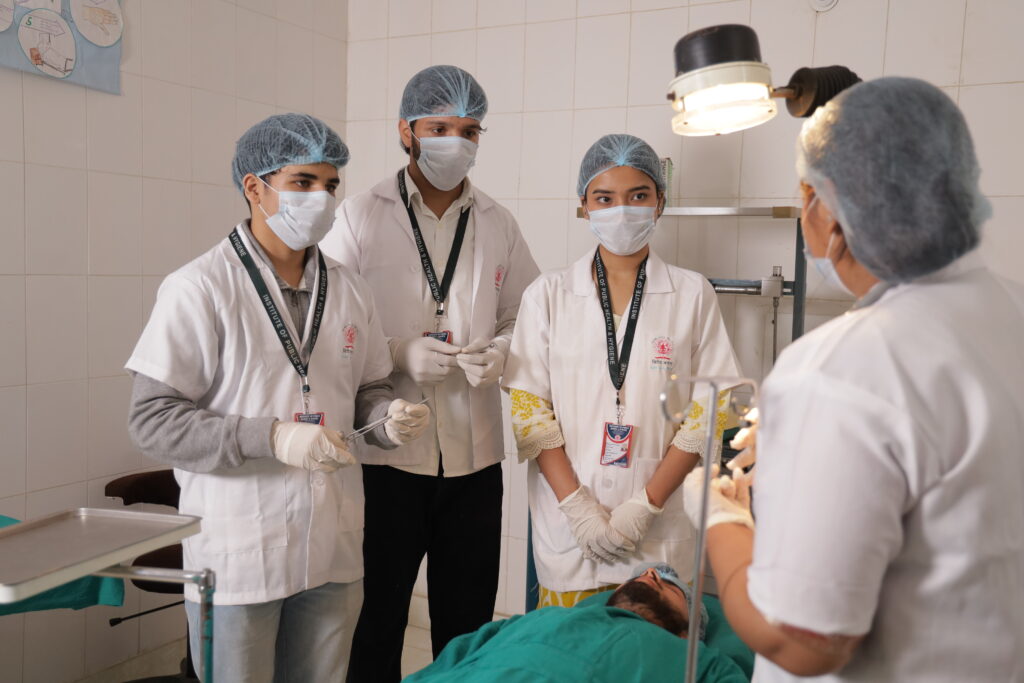
The course is not only about theory. Students also spend time in laboratories and hospitals to understand how real testing procedures work.
Types of Medical Laboratory Technology Courses
Students can choose different MLT courses depending on their qualification and career plans.
Certificate in Medical Laboratory Technology (CMLT)
This is usually the shortest course in the field.
Duration:
6 months to 1 year
Eligibility:
10th or 12th pass
The course focuses on basic laboratory work such as sample collection, testing support, and safety procedures. It is suitable for students who want to start working quickly in entry-level lab roles.
Diploma in Medical Laboratory Technology (DMLT)
DMLT is one of the most common choices after 12th science.
Duration:
2 years
Eligibility:
10+2 with science subjects
Students learn subjects like:
- Pathology
- Microbiology
- Biochemistry
- Blood testing
- Laboratory techniques
The course includes practical training, which helps students become comfortable with real laboratory work.
Career Options:
- Lab Technician
- Blood Bank Technician
- Pathology Lab Assistant
- Diagnostic Lab Technician
Average Starting Salary:
Rupees 10,000 to 25,000 per month
Many students prefer DMLT because it offers good job opportunities within a shorter duration.
Bachelor’s in Medical Laboratory Technology (BMLT / B.Sc MLT)
This is a more detailed and advanced course compared to certificate and diploma programs.
Duration:
3 to 4 years
Eligibility:
10+2 with Physics, Chemistry, and Biology, usually with minimum qualifying marks
The course covers advanced laboratory procedures, diagnosis techniques, research basics, and lab management. Students also complete practical training and internships in hospitals or diagnostic centers.
Career Options:
- Medical Lab Technologist
- Senior Lab Technician
- Research Assistant
- Quality Control Analyst
- Laboratory Supervisor
Average Salary:
Rupees 15,000 to 35,000+ per month depending on skills and experience
A bachelor’s degree usually offers better career growth and higher study opportunities later.
Eligibility for MLT Courses
Most colleges follow similar admission requirements.
Basic Eligibility:
- 10+2 pass from a recognized board
- Science stream preferred
- Physics, Chemistry, and Biology subjects
- Minimum qualifying marks as per college rules
- Minimum age generally 17 years
Some institutions also conduct entrance exams, while others offer admission based on 12th marks.
MLT Course Fees
Course fees depend on the college, facilities, and type of institution.
Approximate Fee Structure:
| Institution Type | Average Fees |
| Government Colleges | 10,000 – 60,000 per year |
| Private Colleges | 70,000 – 1.5 lakh per year |
| Premium Institutions | 1.5 – 2.5 lakh per year |
Some colleges also provide scholarships or installment payment options for students.
Medical Laboratory Technology Course Admission Process
The admission process is usually simple.
Students generally need to:
- Fill out the application form
- Submit educational documents
- Appear for entrance exams if required
- Attend counseling or interview rounds
- Confirm admission after fee payment
Admission procedures may differ slightly from one institution to another.
Subjects Covered in MLT
The course includes both theoretical and practical subjects.
Common Subjects Include:
- Human Anatomy and Physiology
- Biochemistry
- Microbiology
- Pathology
- Pharmacology
- Blood Banking
- Laboratory Management
- Clinical Testing Procedures
- Sterilization and Safety
Practical training is an important part of the course because laboratory work requires hands-on experience.
Career Scope After MLT Course
Medical laboratory professionals are needed in almost every healthcare setup.
After completing the course, students can work in:
- Hospitals
- Diagnostic laboratories
- Pathology labs
- Blood banks
- Research centers
- Pharmaceutical companies
- Public health laboratories
As healthcare services continue to grow in India, the demand for trained lab professionals is also increasing steadily.
Job Roles After MLT Course
Some common job profiles include:
- Lab Technician
- Medical Lab Technologist
- Pathology Technician
- Blood Bank Technician
- Research Assistant
- Quality Assurance Analyst
With experience, professionals can move into senior laboratory and management roles.
Salary After MLT Course
Salary depends on qualification, workplace, city, and experience.
Average Salary Range:
| Experience Level | Salary |
| Freshers | 2.5 – 4 LPA |
| Mid-Level Professionals | 3.5 – 5.5 LPA |
| Senior Professionals | 5 – 8 LPA |
| Specialized Experts | 8 – 12+ LPA |
Private hospitals and large diagnostic chains may offer higher salary packages to experienced professionals.
Government Job Opportunities
Government healthcare institutions also recruit MLT professionals regularly.
Opportunities are available in:
- AIIMS hospitals
- Railway hospitals
- ESIC hospitals
- State government hospitals
- Public health laboratories
Government jobs are preferred by many students because they provide stability, fixed working hours, and long-term benefits.
Higher Study Options After MLT
Students who want to continue their education can pursue:
- M.Sc in Medical Laboratory Technology
- M.Sc in Microbiology
- M.Sc in Biochemistry
- Specialized certification courses
- Research programs
Higher studies can help students move into teaching, research, or advanced laboratory roles.
Why Choose Medical Laboratory Technology?
MLT is a good career option for students who:
- Enjoy biology and laboratory work
- Want a healthcare career
- Prefer practical learning
- Want stable job opportunities
- Are comfortable working with diagnostic equipment
The field may not always be visible to patients, but laboratory professionals play an important role in diagnosis and treatment every single day.
FAQs
Can I do MLT after 12th?
Yes. Most MLT courses accept students who have completed 12th with science subjects.
Is MLT a good career option?
Yes. Healthcare services depend heavily on laboratory testing, so trained professionals continue to remain in demand.
What is the starting salary after MLT?
Freshers generally earn between ₹2.5 and ₹4 LPA, depending on qualification and workplace.
Are government jobs available after MLT?
Yes. Government hospitals and public healthcare institutions regularly recruit laboratory professionals.
Which is better: DMLT or BMLT?
DMLT is shorter and helps students start working earlier. BMLT is more advanced and usually offers better long-term career growth.
Keep visiting Institute of Public Health & Hygiene for such beautiful educational blogs. Follow us on Facebook, Twitter, Instagram, YouTube and Linkedin for regular updates.