
Most students after Class 12 do not know where to start with healthcare careers. They hear about MBBS and immediately feel overwhelmed. But here is what nobody tells you – nursing is where the real action is. And the GNM course is one of the best ways to get there fast. It trains you for real hospital work, real patient care, and real responsibility. If you are serious about healthcare, this guide will help you decide.
GNM Course Full Form
GNM stands for General Nursing and Midwifery. Now here is the part most students get wrong – it is a diploma, yes, but it is not a small qualification. GNM-trained nurses handle ICUs, maternity wards, and emergency rooms daily. The course takes clinical nursing, patient care, and midwifery seriously. You finish it knowing how to handle real medical pressure – not just pass exams.
GNM Course Duration
3.5 years – that is the total duration of the GNM programme. The first 3 years involve structured classroom learning and clinical training. The final six months are a compulsory internship in a real healthcare setting. That internship is not just a formality. You work alongside doctors and senior nurses on actual cases. By the time it ends, you have built confidence that no classroom can fully provide you.
Job Opportunities After the GNM Course
GNM graduates are in demand across India and even abroad. Hospitals and government health centres always need qualified nurses. The roles available after GNM are more varied than most students expect. Here is an honest look at where GNM can take you.
Top Job Roles
- ICU Nurse
ICU nursing is not for the faint-hearted – and that is exactly why it pays well. You care for critically ill patients around the clock. You monitor complex equipment and react fast in emergencies. It is one of the most respected nursing roles in any hospital.
- Legal Consulting Nurse
This one surprises most people. Legal nurse consultants work with law firms and research bodies. They review medical records and prepare detailed reports for legal cases. It is a niche role but a growing one in India’s legal-medical space.
- Forensic Nurse
Most nursing trainees have never even heard of this role. This is exactly why it stands out. Forensic nurses step in when healthcare meets crime. They treat people of violence and ruin with real sensitivity and skill. On top of providing care, they handle something equally important – evidence. They gather and protect medical evidence that courts and investigations actually rely on. It takes emotional strength and sharp clinical training both at once.
- Clinical or Hospital Nurse
Walk into any hospital and the people keeping everything together are the clinical nurses. They work across wards – paediatrics, cardiology, surgery, you name it. Some build expertise in one specialised area over time. Others move across divisions and form a wide skill set. Either way, this role gives you regular work and solid pay.
- Home Nurse
Not every patient can make it to a hospital – and that is where home nurses come in. Old patients or people healing from surgery and those handling regular illness need care at home. A home nurse comes to check vitals and helps with pills. She makes sure things are normal. It is a flexible role, and cities across India need more of them right now.
- Nurse Midwife
Childbirth is one of the most important moments in a family’s life – and nurse-midwives are right there for it. They help women through the pregnancy period. They run routine check-ups and make sure both mother and baby stay safe. This role fills a vital gap in India. Especially in areas where good doctors are not always available.
Eligibility for GNM Course
Nobody wants to apply and then find out they were ineligible all along. So before you start picking colleges, just match these basics. Most Class 12 students already qualify – this is not a difficult bar to clear.
- A Class 12 pass certificate from a recognised board is the first thing.
- English must have been one of your subjects in Class 12 – most institutes insist on this.
- Aggregate marks between 40-50% in your qualifying exams are typically enough.
- Science stream with Biology gives you an edge, but Arts and Commerce students can apply too.
- Your age must be at least 17 years at that time.
GNM Course Admission Process and Syllabus
Getting into a GNM programme involves a few clear steps. Missing any one of them can delay your entire form. Follow this well and you will avoid bad stress.
Admission Process
- Check your eligibility first.
- Study government and private colleges in your city and pick 2-3 options.
- Find out if your state runs a GNM entrance exam.
- If no entry exam happens, many colleges admit you based on your Class 12th.
- Fill out the application form and attach all needed papers.
- Show up for the counselling session or interview at your shortlisted institute’s schedule.
- Once your seat is assured pay the fees instantly.
- Get a medical fitness certificate from a certified doctor and submit it.
- Your final admission letter arrives once every step is done.
GNM Course Syllabus
The GNM syllabus is spread across 3 years. Each year making up the last. Here is a clear study of what you will learn.
First Year
- Anatomy and Physiology
- Microbiology
- Psychology
- Sociology
- Fundamentals of Nursing
- First Aid
- Personal Hygiene
Second Year
- Medical-Surgical Nursing
- Pharmacology
- Psychiatric Nursing
- Communicable Diseases
- Orthopedic Nursing
- Community Health Nursing
Third Year
- Midwifery and Gynecology
- Pediatric Nursing
- Mental Health Nursing
- Community Health Services
- Nursing Administration
- Clinical Internship
Why Choose IPHH for Your GNM Course?
There are many nursing institutes across Delhi, but IPHH keeps coming up for a reason. The Institute of Public Health and Hygiene in Mahipalpur, New Delhi has built a reputation that students genuinely talk about. It is not just the certificate at the end – it is what happens during the 3.5 years. Here is what sets IPHH apart from the rest.
Extensive Practical Training
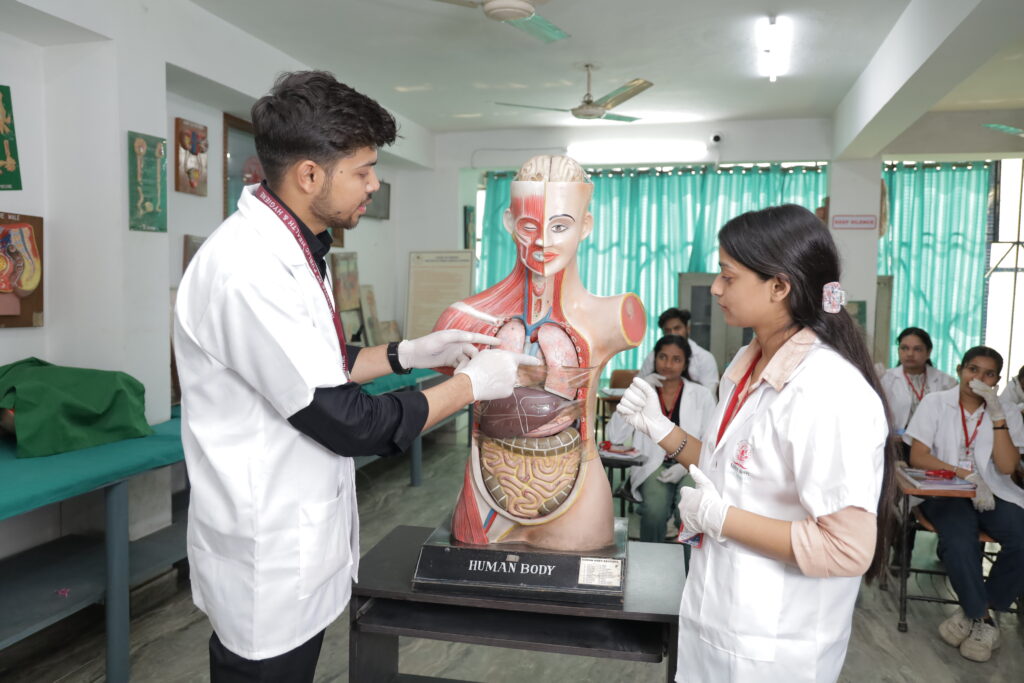
A lot of institutes talk about practical training – IPHH actually delivers it. Students do not just read about clinical procedures – they practise them in proper simulation labs on campus. Then they step into real hospital environments through rotations at Fortis and Metro Hospital. By the time students finish their second year, they have already handled real patient scenarios. That early exposure changes how you think and how quickly you adapt on the job.
100% Placement Assistance
IPHH has a dedicated placement cell that works actively for every graduate. They connect students with hospitals and healthcare organisations across India. Some graduates even land international placements through the institute’s network. You study hard – they make sure someone notices.
Experienced Faculty
The teachers at IPHH do not just read from slides and move on. They have worked in clinical settings and they bring those real experiences into class. When a faculty member explains a complex procedure, they often follow it up with something they have personally seen. That context makes a real difference when students start their internships and face actual patients.
Pocket-Friendly and Financially Accessible
Let us be honest – nursing college fees worry most families before anything else does. IPHH has deliberately kept its course fees at a level most students can actually manage. Scholarships exist for students who deserve financial support but cannot afford it independently. Education loan assistance is also available for anyone who needs a structured payment plan. Good nursing training should not be something only wealthy families can access.
Convenient Location and Facilities
Anyone who has hunted for a college in Delhi knows how much location matters daily. IPHH is right here – you step off and you are practically there. No hour-long commutes, no exhausting travel before a full day of clinical training. Students coming from other states do not need to figure out accommodation on their own – safe hostel facilities are available close to campus.
Keep visiting Institute of Public Health & Hygiene for such beautiful educational blogs. Follow us on Facebook, Twitter, Instagram, YouTube and Linkedin for regular updates.